
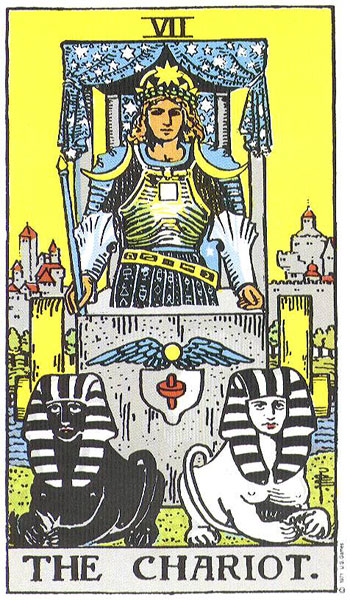
The Chariot
Upright Meaning
The Chariot upright represents overcoming obstacles with strong willpower, achieving victory and control. In love, it indicates that the relationship is entering a phase of active progress, possibly through proactive pursuit or resolving conflicts. Singles display confidence and determination, easily attracting others; those in relationships can steer the direction of the partnership, but need to balance both parties' needs and avoid being overbearing. In career, this card predicts success amid challenges, especially suited for competition, sales, entrepreneurship, or fields requiring high self-discipline. You have clear goals and strong execution ability, able to coordinate team differences and lead projects forward. In health, it symbolizes recovery or maintaining vitality through strong will, particularly beneficial for rehabilitation or exercise plans requiring discipline. However, the card also reminds: victory requires sustained effort, and inner balance must be maintained to avoid mental tension from the pursuit of control. Overall, the Chariot encourages you to integrate resources, focus on goals, and move toward success with confidence and discipline.
Reversed Meaning
The Chariot reversed suggests scattered willpower, loss of control, or a wrong direction. You may feel overwhelmed, caught in inner conflict or external obstacles. In love, it often indicates poor communication, power struggles, or lack of commitment—one partner may be too dominant, causing imbalance, or avoiding responsibility, stalling progress. In career, projects may be delayed, competition lost, or team discord arises; you might lack a clear plan or make judgment errors driven by emotions, requiring caution against reckless decisions or aggressive attitudes. In health, excessive stress may lead to fatigue, anxiety, or immune system imbalance, especially symptoms related to the digestive system or chronic stress. The Chariot reversed also reveals suppressed emotions (such as anger or fear) interfering with progress, or external victories masking inner emptiness. At this time, you need to reassess your goals, examine whether you are rushing for results while neglecting balance, and learn to listen to your inner voice rather than forcing control.
AI Deep Reading
A fresh reading of this card, written on the spot by AI.
Nothing is written until you ask — the reading is generated only when you tap the button.
History
The Chariot is the seventh card of the Major Arcana in tarot, with its history traceable back to Renaissance Italy. In the earliest tarot decks, this card often depicted a triumphant monarch or hero driving a chariot pulled by two animals, symbolizing military victory and worldly power. In early versions such as the Marseilles Tarot, the charioteer was sometimes shown without reins, suggesting a primal control over instinctual impulses. In the late 19th-century Rider-Waite-Smith system, Arthur Edward Waite and artist Pamela Colman Smith redesigned the card, endowing it with richer layers of symbolism: the charioteer became a conqueror wearing a star crown, bearing a crescent moon on his shoulders, and clad in armor, while the chariot was transformed into a mobile castle pulled by a black and a white sphinx. This design integrated esoteric concepts such as astrology (corresponding to Cancer) and the paths of the Kabbalistic Tree of Life, elevating the card’s meaning from mere military triumph to the harmonization of inner will and opposing forces.
Symbolism
The Chariot card is the ultimate symbol of willpower and mastery. The chariot itself represents a vehicle carrying consciousness through external challenges; the two black and white sphinxes symbolize opposing forces (such as reason and emotion, light and darkness), which are harnessed by the charioteer, indicating the achievement of balance and progress through will. The star canopy above the chariot signifies divine protection and ideals, while the crescent moon on the shoulder represents intuition and change. The armor reflects defense and determination, and the scepter in hand symbolizes active will. The city backdrop represents worldly achievements, and the chariot has no reins, emphasizing control through spiritual power rather than physical restraint. The overall image conveys that true victory comes from inner integration, clear intention, and the harmonious mastery of opposing forces.
Advice
Focus your will, clarify your direction forward, but do not use brute force. Reconcile inner conflicts (such as reason and emotion), transforming them into momentum for progress. When facing obstacles, maintain patience and self-discipline, guiding energy like a skilled charioteer. If you feel out of control, pause first to restore balance, then set off anew.
Related Cards
Frequently Asked Questions
Why are the two sphinxes on the Chariot card different colors?
The black and white sphinx represents opposing forces, such as consciousness and the subconscious, positive and negative, light and darkness. The charioteer drives them forward in the same direction, symbolizing the integration of inner contradictions through willpower, transforming opposing energies into forward momentum.
Does the Chariot card necessarily signify success in career interpretations?
The Upright Chariot indicates that victory may be achieved through willpower and action, but success requires clear goals, sustained effort, and the balancing of contradictions. It emphasizes the process rather than the outcome, reminding that victory comes from inner control, not luck.