The Devil
Upright Meaning
The upright Devil card reveals a state of enslavement by desires, habits, or material dependencies. In love, it may manifest as a relationship filled with passion but lacking genuine emotional connection, or an unhealthy partnership based on physical attraction, control, economic dependency; it may also suggest feeling trapped in a relationship yet unwilling to leave. In career, it points to excessive pursuit of fame and wealth, defining self-worth through work, workplace power struggles, or being caught in an exploitative environment; entrepreneurs need to be wary of the tendency to do anything for success. In health, it is often associated with addictive behaviors (such as smoking, alcohol, drugs, binge eating), or chronic fatigue caused by stress; it also symbolizes being dominated by physical desires while neglecting mental health. On a psychological level, this card represents self-limiting beliefs (such as "I cannot change"), excessive attachment to security, or indulgence in instant gratification while avoiding growth. Overall, the Devil card does not condemn external evil, but reveals how we voluntarily put on shackles—those material dependencies and thought patterns that make us feel comfortable yet hinder the freedom of the soul.
Reversed Meaning
The reversed Devil card symbolizes the initial stage of breaking free from constraints, but the process may be fraught with struggle. At this point, the individual begins to recognize their own addictions, obsessions, or states of entrapment, and attempts to break away. However, the reversal often comes with two possibilities: one is gradually shedding control over material things or relationships, reassessing values, and breaking harmful habits; the other is sinking deeper into denial and avoidance, perpetuating dependency in more covert ways (such as using workaholism to mask emotional emptiness). In love, it may mean trying to leave a toxic relationship but repeatedly faltering, or becoming aware of controlling patterns in the relationship. In career, it could involve extricating oneself from an exploitative environment, or conversely, clinging more tightly to an insecure job out of fear. In health, the reversal indicates the potential for recovery, but one must be wary of withdrawal symptoms or relapses into old habits. On a psychological level, this position suggests an opportunity for dialogue with the shadow self—acknowledging the existence of desires without being dominated by them, transforming raw energy into creativity. The reversed Devil reminds us: the chains were already loose; true liberation begins with recognizing that you hold the key.
AI Deep Reading
A fresh reading of this card, written on the spot by AI.
Nothing is written until you ask — the reading is generated only when you tap the button.
History
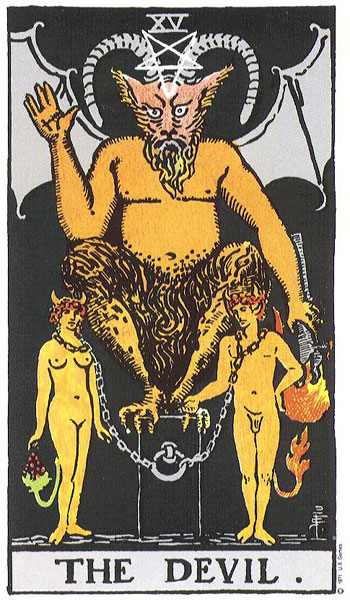
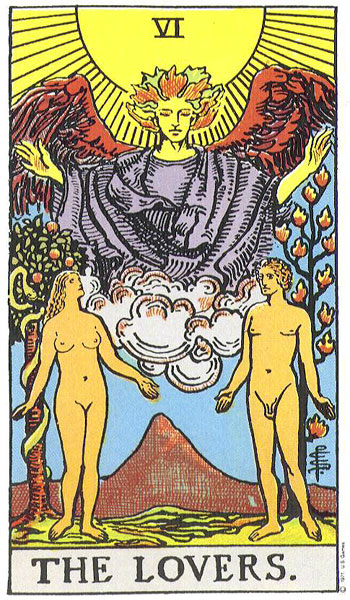
In early Tarot, the Devil card was known as the "God of Hell" or "Baphomet," with its imagery traceable to the "Devil" figure in the 15th-century Visconti-Sforza Tarot, depicted as a winged monster. In the Marseille Tarot, the Devil is portrayed as a horned, winged, humanoid monster, often associated with pagan deities or the Christian fallen angel Lucifer. In the Rider-Waite Tarot, designed by A.E. Waite, a member of the Hermetic Order of the Golden Dawn, in the late 19th century, the Devil card was given a more complex symbolic system: the card's composition resembles that of the Lovers card, but Adam and Eve are bound by chains, with the Devil perched above them, emphasizing the bondage of material desires over humanity. This card reflects the Renaissance exploration of the dark side of human nature and the esoteric tradition's understanding of the "shadow self." It does not represent external evil but rather the untamed desires and material attachments within human nature.
Symbolism
The core symbolism of the Devil card is "material bondage" and "enslavement to desire." The devil's horns and the inverted pentagram (point downward) on the card symbolize matter overpowering spirit, and bestiality dominating reason. The flames on the tails of Adam and Eve represent repressed primal instincts; the chains around their necks, though seemingly tight, can be removed by themselves, suggesting that bondage stems from self-choice. The torch in the devil's hand points downward, symbolizing energy sinking into the material world. The pedestal beneath the devil's feet represents rigidified thought patterns. With its dark tones and cave-like background, the entire card depicts a state where the spirit is trapped in the material world, reminding people to be aware of self-imposed prisons such as addiction, greed, and the lust for power.
Advice
Examine which 'comfort zones' in life are actually cages. Honestly confront your desires and fears, distinguishing genuine needs from compulsive dependencies. Try temporarily stepping away from addictive habits or relationships, and practice saying 'no.' Redirect the energy spent on excessive material focus toward creative activities, or understand your inner sense of lack through meditation and self-dialogue. Remember: the first step toward liberation is recognizing the existence of the chains.
Related Cards
Frequently Asked Questions
Does the Devil card represent true evil or a curse?
No. The Devil card primarily symbolizes self-bondage and material attachment, rather than external evil forces. It reflects the unintegrated shadow aspects of human nature, such as greed, control, or addictive tendencies, which often stem from fear or unmet psychological needs.
The composition of the Devil card and the Lovers card is similar; what is the connection between them?
The composition of the two cards echoes each other, but the Lovers card represents free choice and spiritual union, while the Devil card reveals a "false union" twisted by desire—a relationship based on dependency rather than true love. The contrast between the two reveals that the same energy (such as sexual attraction) can lead to either transcendence or degradation.