
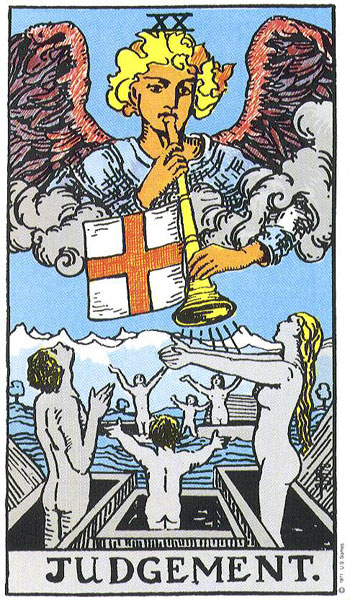
Judgement
Upright Meaning
The upright Judgment card signifies a clear calling, profound awakening, and spiritual rebirth. It asks you to review the past, integrate your experiences, and respond to the higher purpose of life. In love, this card may indicate that a relationship is entering a phase of deep evaluation and rebirth. For singles, it suggests you are ready to let go of old emotional patterns, to issue or respond to a call for true love, and you may encounter someone with a deep soul-level connection. For those in a relationship, it represents a new stage of maturity and sincerity after trials, possibly requiring mutual forgiveness and a reaffirmation of commitment. In career and academics, the Judgment card represents hearing your professional "calling." You may receive an important message, offer, or feedback that prompts you to reassess your career path. It could signify a promotion, a job change to a field more aligned with your life’s mission, or the final verdict on a major project. This is also a time for deep self-evaluation, gaining public recognition, or completing a certification. You need to follow your inner voice to make decisions. In health, the upright Judgment card indicates recovery and renewal. It may represent healing from a chronic illness, or the beginning of a new cycle of treatment and recovery through a medical diagnosis (like a trumpet-like message). On a psychological level, it symbolizes complete liberation from past trauma or negative patterns, leading to spiritual rejuvenation. Overall, the upright Judgment card is positive and powerful. It marks the end of an old cycle and the beginning of a new life, but all of this is built upon the foundation of honestly facing and integrating the past.
Reversed Meaning
The reversed Judgment card indicates that you have failed to hear or refused to respond to life’s calling, leading to delays, self-doubt, or being stuck in the past. You may fear change, be unwilling to face the major evaluations that need to be made, or dwell on past mistakes, unable to forgive yourself or others. This can result in a sense of stagnation, as if trapped in a "tomb" unable to be resurrected. The inner trumpet call becomes faint or ignored, and you may choose to avoid important decisions or information. In love, reversed Judgment may signify a relationship stuck in mutual blame, an inability to forgive old wounds, or a refusal to confront core issues in the relationship. Singles may be trapped in nostalgia for past loves, unable to open up to new opportunities. In career, it suggests a fear of accepting new challenges or a refusal to acknowledge problems at work. You may miss important deadlines, messages, or promotion opportunities due to a lack of clear self-awareness. Fear of your professional calling may cause you to remain in an unsatisfactory status quo. In health, the reversed card may indicate delaying medical treatment, refusing to heed the body’s warning signals, or a recovery process delayed by psychological factors such as guilt or unwillingness to change habits. Psychologically, it points to deep self-criticism, indulgence in regret, and a lack of self-forgiveness. Reversed Judgment ultimately urges you: it is time to listen carefully to that suppressed calling, to bravely face the past, so that you can break the cycle of self-limitation.
AI Deep Reading
A fresh reading of this card, written on the spot by AI.
Nothing is written until you ask — the reading is generated only when you tap the button.
History
The Judgment card is the 20th card in the Major Arcana of the Tarot, with a history dating back to the Renaissance. In early tarot decks such as the Visconti-Sforza, this card often depicts the scene of the Last Judgment from the Book of Revelation in Christianity, where an angel blows a trumpet and the dead rise from their graves. The Marseille Tarot continues this theme, emphasizing concepts of salvation and karma. In the Waite-Smith system, Arthur Edward Waite further reinforced its meanings of "awakening" and "inner calling." The figures in the image, regardless of age or gender, respond together to the angel's call, symbolizing the soul's awakening to a higher purpose. This card has gradually evolved from a religious final judgment into a more personal, psychological "calling" and "rebirth," reflecting the transformation of tarot from a purely religious symbol into a tool for spiritual growth.
Symbolism
The core symbol of the Judgment card is the "Trumpet of Awakening." The angel Gabriel at the center symbolizes divine revelation and communication; the trumpet he blows represents a clear call and the proclamation of truth. The open graves below symbolize liberation from old states, while the standing figures responding represent different aspects of the self (body, emotion, mind, soul) achieving unity and rebirth under the call. Their arms are outstretched in a reverent posture, symbolizing acceptance, surrender, and resurrection. The river or ocean in the background represents the subconscious, while the distant mountains signify the spiritual heights to be climbed. The cross-shaped banner hints at sacrifice and redemption. Together, all elements of the image point to a central theme: by heeding an inner or outer call, summarizing and evaluating the past, one attains a complete renewal and elevation at the soul level.
Advice
Please quietly listen to the call within your heart or the clear messages coming from the outside. Now is the time for deep self-assessment, reflecting on the past, and making decisions. Bravely respond to this call, even if it demands significant changes from you. Forgive yourself and others for the past, let go of regret and blame, so that you can rise from old patterns and welcome a new phase of life. Follow the mission of your soul and move forward.
Related Cards
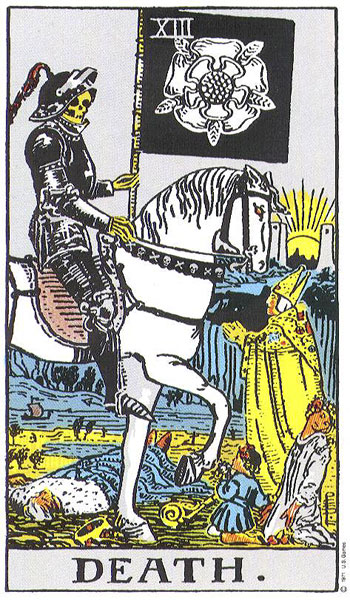
Frequently Asked Questions
The Judgment card and the Death card both signify "endings." What are their differences?
The Death card represents an inevitable, complete ending and release of a chapter, emphasizing "termination" itself. The Judgment card, on the other hand, builds upon the ending, emphasizing "evaluation, calling, and rebirth." It focuses on the summary and sublimation of all past experiences, responding to a higher calling to enter a new phase. Death is "dying," while Judgment is "resurrection and judgment after death."
Does the appearance of the Judgment card necessarily relate to religious judgment?
In modern Tarot readings, the Judgment card rarely refers to religion or the final Day of Judgment. Its core meaning is more focused on the personal level of "the call to awakening" and "rebirth of the soul." It concerns the inner voice, the call of destiny, life review and evaluation, and the profound transformation and renewal that follow.