
Six of Cups
Upright Meaning
In love the Six of Cups most often brings the past forward: an ex reappearing after a long silence, a reunion that reopens an old question, or a partnership that begins to feel like something out of childhood. It also describes a relationship that works because it is uncomplicated and safe rather than thrilling, and sometimes that is exactly what is wanted. At work it appears as mentorships, as a senior colleague who teaches without keeping score, and as projects drawing on material you loved long before anyone paid you for it. Its innocence is real but retrospective, which is exactly what makes it persuasive; the caution is that nostalgia flatters whatever it touches.
Reversed Meaning
The reversal keeps the gift in the same hands, but the receiver has grown up. Here is the card of living in the past: replaying an old relationship, treating a parent's approval as the standard, or remaining the person who keeps supplying care nobody asked for. At work it can show as clinging to familiar methods that have stopped working, or as credulous assumptions about how offices really distribute credit. In love it may flag childish dynamics such as sulking and testing. Its invitation is to keep the openness and drop the dependence.
AI Deep Reading
A fresh reading of this card, written on the spot by AI.
Nothing is written until you ask — the reading is generated only when you tap the button.
History
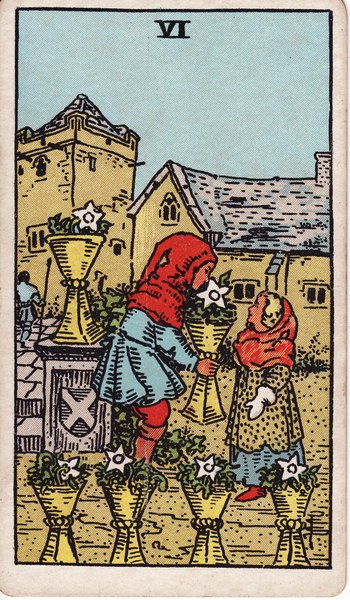
Etteilla, who read the cards as a system of causes rather than as pictures, put the past itself on this card. Marseille decks kept the meaning and drew only six cups arranged in two rows of three. Waite's garden scene changed the subject from time to memory: an older child passing a cup of flowers down to a younger one, both of them inside a wall that shuts the world out. Every cup holds blossoms rather than water, so nothing in the scene has to be drunk.
Symbolism
The exchange runs downward, from a taller figure to a smaller one, so the card is about giving with no prospect of return: the pleasure of handing something over. Each cup holds flowers, and flowers cannot be drunk, which reframes the suit's water as something kept for its scent and its memory rather than for thirst. The walled garden seals the scene off, and the departing figure suggests this moment is already behind the person remembering it.
Advice
Keep the enthusiasm of the child and the judgement of the adult. If someone from your past returns, ask what is actually different this time; if the honest answer is nothing, let the memory stay a memory rather than a plan.
Related Cards
Frequently Asked Questions
Does the Six of Cups mean an ex-partner will return?
It is genuinely associated with reunions and with old people reappearing, but that is not the same as getting back together. The deciding factor is whether forward-driving cards such as the Chariot or the Eight of Wands appear. With only nostalgic imagery around it, the card asks you to see the past clearly.
Both the Six and the Three of Cups involve friends — how do they differ?
The Three of Cups describes the present circle of friends and shared celebration, so its centre is the group around you now. The Six of Cups describes old relationships and childlike generosity, so its centre is the people who already belong to the past and still occupy your mind, usually family and childhood friends.