
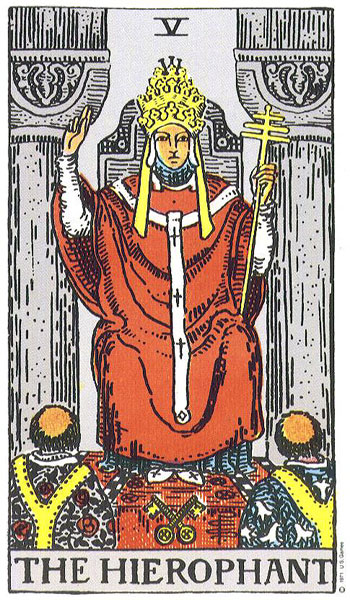
The Hierophant
Upright Meaning
The upright Hierophant represents following tradition, receiving education, seeking spiritual guidance, and integrating into social norms. In love, it may indicate a stable relationship based on shared beliefs or values, such as marriage or a long-term commitment; it may also suggest meeting a partner through traditional means, or that the relationship requires respect for both families and societal expectations. Singles may need to meet a suitable partner through social circles or introductions by elders. In career, the Hierophant symbolizes development within established systems, such as education, religion, consulting, or large institutions; it encourages obtaining formal qualifications, following company culture, accepting mentorship, or engaging in work that disseminates knowledge. At this time, changing jobs or starting a business may not be the best choice—consolidating one’s current position and accumulating experience is more advantageous. In health, it advises following orthodox medical advice, undergoing routine check-ups, and maintaining regularity in lifestyle habits; it may also relate to managing chronic conditions or seeking specialist treatment. On a spiritual level, the Hierophant encourages participating in group practices, studying philosophy or religion, and improving oneself through structured paths. Overall, this card affirms the value of traditional wisdom, moral norms, and social recognition, emphasizing finding a sense of security and direction for growth within existing frameworks.
Reversed Meaning
The reversed Hierophant suggests resistance to, rigidity within, or misuse of tradition, authority, or established systems. It may manifest as dogmatism, blind obedience, or conversely, outright rebellion against rules and refusal to accept guidance. In love, it can indicate a relationship overly interfered with by family or social pressure, or one partner being overly conservative and controlling; it may also reveal hidden moral conflicts or a formalized union lacking genuine emotion. In career, the reversed Hierophant warns of bureaucracy, rigid systems hindering development, or misguided advice from a mentor or superior; one may feel a lack of innovation at work or a clash with company values. At such times, be wary of blindly trusting authority or avoid getting involved in unethical business practices. In health, it may point to physical or mental issues arising from neglecting conventional treatment, relying on folk remedies, or excessively suppressing emotions; it also suggests checking the endocrine or reproductive system. On a spiritual level, the reversed Hierophant reflects a crisis of faith, detachment from spiritual communities, or falling into empty ritualism. It can also represent non-mainstream educational paths or the breaking of traditional wisdom transmission. Overall, this card encourages questioning rigid norms and seeking personalized beliefs, but one must be cautious not to veer into extreme isolation or the outright rejection of all value systems.
AI Deep Reading
A fresh reading of this card, written on the spot by AI.
Nothing is written until you ask — the reading is generated only when you tap the button.
History
The Pope card is numbered V in traditional Tarot and is an important card in the Major Arcana of the Marseille system and the Waite system. Its imagery can be traced back to the religious and cultural structures of medieval Europe, originally called "Le Pape" (The Pope), directly reflecting the authoritative role of the Pope in the Roman Catholic Church. In Renaissance Tarot decks, this card often depicts the Pope seated on a throne, blessing or teaching two kneeling figures, symbolizing a bridge between sacred knowledge and the secular faithful. As Tarot evolved from a game card into a spiritual tool, the meaning of the Pope card expanded from a purely religious authority to broader concepts of tradition, educational systems, and moral codes. Under the interpretations of the Hermetic Order of the Golden Dawn and Arthur Edward Waite in the late 19th century, this card was further associated with Taurus (the element of Earth), emphasizing its qualities of stability, practicality, and tradition, becoming a symbol of seeking structured knowledge and spiritual guidance.
Symbolism
The Pope card is rich in symbolic imagery: the Pope wears a triple crown, representing the three levels of body, mind, and spirit, or the triple authority of divine power; his right hand makes a blessing gesture, with the index and middle fingers pointing toward the sky, conveying divine grace and instruction; his left hand holds a triple-cross staff, symbolizing the connection between supreme spiritual authority and the material world. The two crossed keys (gold and silver) at his feet signify the opening of the gates between consciousness and the subconscious, heaven and earth. The gray stone pillars on either side of the Pope’s throne suggest a stable traditional structure, while the two reverent followers before him (sometimes one dressed in rose-colored robes and the other in lily-colored robes) represent seekers in need of guidance. The overall composition emphasizes receiving instruction within an established system, following rituals, and inheriting wisdom, while the Earth element endows it with qualities of practicality, endurance, and concreteness.
Advice
Respect traditional wisdom, but maintain independent thinking. Seek authoritative guidance or systematic learning when needed, while remaining vigilant against dogmatism. If you feel constrained, gently challenge outdated rules, but do not reject the structure itself entirely. Share knowledge within the community and keep an open mind to different perspectives. Balance personal beliefs with societal expectations, and find your own spiritual path.
Related Cards
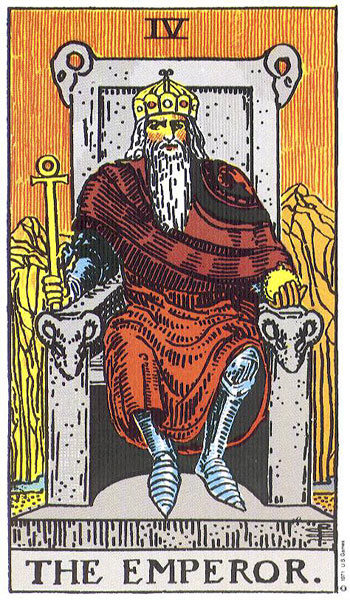
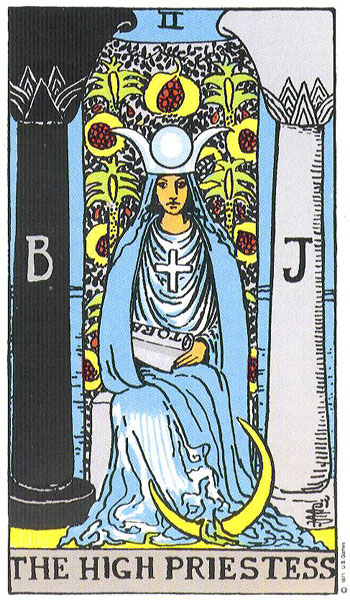
Frequently Asked Questions
Does the Pope card only represent religious significance?
Not exactly. Although the Pope card originates from religious imagery, in modern interpretations it more broadly symbolizes any form of tradition, educational system, moral code, mentorship, or structured knowledge (such as academia, corporate culture, social customs).
Does the Pope upright in a career context necessarily mean stability?
Usually so, it emphasizes growing within the existing system, obtaining certification, or following rules. But this does not preclude progress—it may signify promotion, earning a degree, or receiving mentorship from a senior, provided you respect the traditions and hierarchy of the field.
Is the reversed Pope always negative?
Not entirely negative. In reverse, it may suggest the need to break rigid thinking, challenge unreasonable authority, or seek unconventional learning paths. It encourages personal exploration, but one should be careful to avoid falling into chaos or complete isolation.