
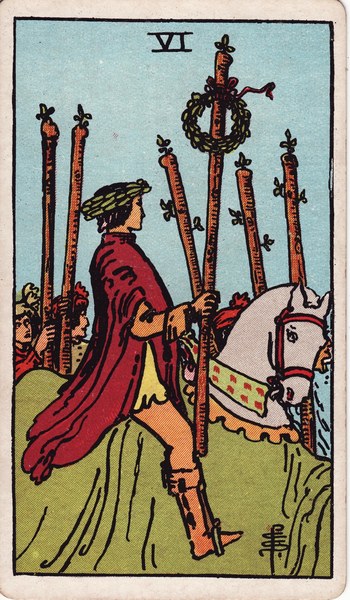
Six of Wands
Upright Meaning
Recognition is the entire subject, and it tends to arrive from outside. Romantic readings show a relationship becoming publicly visible: someone proud to be seen with you, an introduction to friends or family, a proposal or commitment that others are told about. Career readings are unusually direct, whether a promotion, an award, credit finally attached to your name, a launch that lands, or a client who recommends you unprompted. The guidance is to accept the honour without inflating it. Praise is a receipt for work already done, so receive it, name the people who helped, and let it fund the next round of effort.
Reversed Meaning
Turned, the parade continues, but the rider knows something the crowd does not. Recognition may be withheld despite the work, criticism arrive in place of applause, or the applause be loud enough to make its later absence unbearable. Pride is the ordinary failure mode: believing the praise describes you rather than a moment. The harshest reading is the pyrrhic victory, where the prize is won and the cost, whether health, a friendship or a market you alienated, was never written into the plan. The same spread can show a couple performing happiness for an audience while privately disagreeing about the script.
AI Deep Reading
A fresh reading of this card, written on the spot by AI.
Nothing is written until you ask — the reading is generated only when you tap the button.
History
The laurel wreath entered tarot through the triumphal tradition rather than divination. Roman commanders rode into the city crowned and accompanied, and European pageants restaged that arrival for kings and generals; Waite's deck borrows the staging directly, giving the rider a wreath on his head and a second bound to his wand, with attendants walking beside the horse. The decan is Jupiter in Leo, the Lord of Victory.
Symbolism
A white horse lifts the rider above the crowd, so the success shown here is visible by design rather than privately enjoyed. Wreaths worn on the head and bound to the staff make the win and the recognition one event. The figures walking alongside are supporters rather than captives, and the scene is a parade, not a battle: the fighting happened offstage. Recognition, not the achievement, is what the picture actually stages.
Advice
Take the credit, then share it, and check the price before you celebrate. Ask what this recognition actually funds next, and distrust any win that only looks good from outside. If the applause never came, collect the evidence yourself.
Related Cards

Frequently Asked Questions
Does a reversed Six of Wands always mean failure?
No. It has familiar readings: recognition withheld, praise replaced by criticism, pride that overrates itself, and the hardest case, a pyrrhic win where the thing succeeded but cost more than planned. Ask whether the achievement itself happened; if it did, the reversal says it was not worth the price.
Is the victory in the Six of Wands earned by ability, or by other people's acclaim?
The picture concentrates on reception: the rider moves through a crowd and the honour is conferred by others. The ability belongs to the earlier Five of Wands, where people first contended on level ground. The Six means the ability already exists, and the test is whether you can keep that reputation intact.