
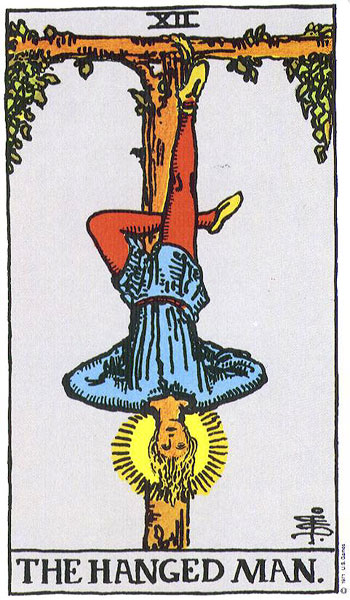
The Hanged Man
Upright Meaning
The upright Hanged Man represents a voluntary pause or sacrifice for a higher purpose. This is not passive suffering, but an actively chosen waiting, aimed at gaining a new perspective. Love: Singles may need to pause their search and reflect on the type of partner they truly need; those in relationships should practice empathy, resolving conflicts through temporary compromise or sacrifice. This card reminds us that love sometimes requires letting go of the ego to understand issues from the other person's perspective. Career: Work may enter a period of stagnation, but this is a time to gather strength. It is not advisable to force plans forward; instead, observe, learn, or undergo training. You may need to temporarily sacrifice personal credit for the team's benefit or accept unconventional work arrangements. Entrepreneurship or project advancement requires patience in waiting for the right moment. Health: Suggests the need to pause from a fast-paced lifestyle, restoring balance through rest, meditation, or gentle exercise (such as yoga). It may reflect chronic fatigue, reminding you to view health from a different angle—for example, seeing illness as a signal from the body to adjust. Psychologically, it encourages accepting the present state rather than forcibly resisting emotions. Overall, the upright Hanged Man teaches the wisdom of "retreating in order to advance": by temporarily letting go, enduring discomfort, or shifting perspectives, you will ultimately gain insight beyond the ordinary.
Reversed Meaning
The reversed Hanged Man suggests resistance to necessary pauses or sacrifices, leading to energy blockage. It may manifest as forced stagnation, meaningless suffering, or refusal to see things from another perspective. Love: Singles may miss out on connections due to stubbornness; those in relationships may fall into a cycle of calculating "who sacrifices more" or refuse to understand their partner's stance. The reversed card warns that if you are unwilling to adjust your perspective, the relationship will reach a deadlock. Career: Work may involve meaningless delays or forced sacrifices (such as unpaid overtime). Opportunities for growth may be missed due to resistance to change, or you may fall into a victim mentality, complaining about unfair circumstances. Be cautious about whether you are avoiding necessary responsibilities or learning processes. Health: Fatigue may accumulate due to ignoring bodily signals, or you may refuse to accept treatment advice. Psychologically, you may become fixated on negative thoughts, falling into cycles of self-pity or anxiety. The reversed Hanged Man calls for an end to futile struggles—acknowledge the current situation and actively seek relief, whether by adjusting your mindset or taking action. Overall, the reversed card indicates being stuck between "sacrifice" and "gain": unwilling to give, yet unable to move forward. At this point, examine: Is the stagnation a voluntary choice or an escape? Is the sacrifice truly meaningful?
AI Deep Reading
A fresh reading of this card, written on the spot by AI.
Nothing is written until you ask — the reading is generated only when you tap the button.
History
The Hanged Man first appeared in 15th-century Italian tarot cards, with its imagery likely originating from the medieval folkloric concept of the "gallows tree" or the "voluntary sacrifice" motif. During the Renaissance, this card became associated with the Norse god Odin, who hung himself upside down from the World Tree for nine days and nine nights to gain wisdom and the runes. The Marseilles tarot named it "Le Pendu," depicting a man with his hands bound behind his back, hanging upside down by one foot, with a calm expression. The Rider-Waite tarot (1910) further emphasized the symbolism of sacred sacrifice and enlightenment: the figure has a halo, his legs form a cross, and the background is filled with light. Numbered XII, this card is linked in numerology to "sacrifice" and "transcendence," reflecting the transition from the material world (number 1) to spiritual awakening (number 2).
Symbolism
The Hanged Man symbolizes the wisdom of gaining by yielding. Its suspended posture represents a shift in perspective—from passive sacrifice to actively choosing to pause. The halo around the head signifies spiritual enlightenment, the red trousers embody physicality and passion, and the blue top represents calmness and wisdom. The crossed legs form the shape of the number 4, hinting at stability and order within restraint. The hands are bound behind the back, indicating a relinquishing of control, yet through this, inner freedom is attained. The overall composition forms an inverted triangle, pointing toward the spiritual realm; the light in the background suggests that epiphany is imminent. The element of water echoes its passive, flowing, and intuitive qualities, emphasizing alignment rather than resistance. The core of this card is "voluntary sacrifice"—gaining deeper understanding through temporary stillness.
Advice
Pause your steps for a moment and allow yourself to observe the current situation from a different perspective. Sacrificing short-term gains may bring long-term insights. Practice empathy: if you were the other person, how would you view this matter? Avoid forcing a breakthrough; instead, go with the flow like water. During the waiting period, focus on inner growth and record your inspirations. Remember, the Hanged Man’s waiting is active—choose to embrace the pause rather than resist it.
Related Cards
Frequently Asked Questions
Does the Hanged Man represent passive suffering?
Not exactly. The upright Hanged Man emphasizes "voluntary sacrifice" and "meaningful pause." Suffering is the surface appearance, but the core is gaining a new perspective by letting go of control. It differs from cards of passive victimhood (such as certain reversed cards), as it represents an active choice to retreat in order to advance.
Should the Reversed Hanged Man take immediate action?
Not necessarily. Reversed often indicates "resisting a necessary pause," so the primary task is to distinguish: is the stagnation due to avoidance or a genuine need for action? If stuck because of fear, resistance must be overcome; if refusing to wait due to impatience, then one must return to the wisdom of the upright position. The key lies in adjusting the mindset rather than acting blindly.