
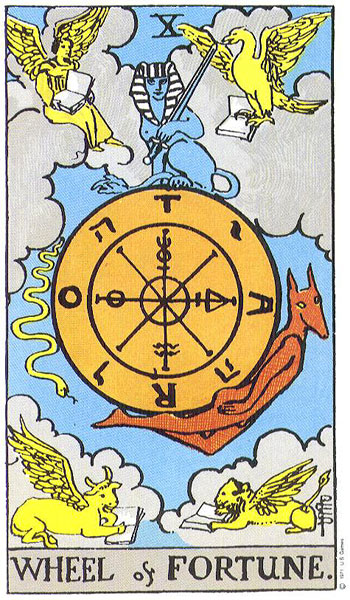
Wheel of Fortune
Upright Meaning
The Wheel of Fortune in the upright position symbolizes a positive turn of fate, an upward phase in the cycle, and sudden opportunities. It indicates that things are shifting for the better, driven by the hand of destiny. In love, singles may encounter a fated meeting, with relationships making breakthrough progress; couples may enter a new phase, possibly reconciling or deepening commitments, emphasizing the connection of fate. In career, it signifies a turning point, opportunities for promotion, favorable shifts in projects, or entering a new cycle—potentially receiving unexpected support or benefiting from industry trends, reminding you to seize the moment and go with the flow. In health, it suggests cyclical recovery, a possible turnaround in illness, or entering a positive cycle through lifestyle adjustments. Overall, this card encourages trusting the flow of life and embracing change with an open heart, as the scales of luck are tipping in your favor. It reminds us to remain humble at the peak of fate, for the cycle never ceases.
Reversed Meaning
The reversed Wheel of Fortune suggests delays in fate, negative turns, or resistance to change. You may feel toyed with by destiny, missed opportunities, blocked plans, or trapped in an unfavorable cycle. In love, relationships may stagnate, the right timing may not have arrived, or old problems may resurface, leaving you feeling powerless to change; singles may encounter unsuitable partners or poor timing. In career, it indicates unfavorable transitions, hindered promotions, project delays, or challenges brought by sudden external changes, making you feel your efforts are wasted or leaving you in a passive position. In health, be mindful of low points in cyclical illnesses, slow recovery, or falling into a vicious cycle of habits. The reversed position also suggests that the individual may be resisting necessary changes or trying to control the uncontrollable, leading to more drastic fluctuations. However, the reversed card is not entirely bad luck; it may simply represent a temporary low point in a cycle, or a reminder that you need to proactively adjust your attitude and actions to break the deadlock. The key lies in recognizing which factors are beyond your control and which parts you can change yourself.
AI Deep Reading
A fresh reading of this card, written on the spot by AI.
Nothing is written until you ask — the reading is generated only when you tap the button.
History
The Wheel of Fortune is one of the oldest and most mysterious cards in the Tarot, with its imagery rooted in philosophical and religious traditions dating back to the Middle Ages and even earlier. The central wheel symbol is directly linked to the concept of the "Rota Fortunae" (Wheel of Fortune) prevalent in classical and medieval times, which depicts the goddess Fortuna turning a great wheel, causing human circumstances to cycle between prosperity and decline. Similar motifs already appeared in early Tarot decks, such as the Visconti-Sforza cards. The version in the Waite-Smith system (1909) became the modern standard, featuring Hebrew letters and alchemical symbols engraved on the wheel, surrounded by a man, an eagle, a lion, and an ox (symbolizing the four Evangelists and the four elements), and guarded by a sphinx and a serpent deity. It integrates Kabbalistic, astrological, and Christian symbolism, emphasizing cosmic cycles, divine order, and the unpredictable transformative power of fate.
Symbolism
The core symbol of the Wheel of Fortune is the eternally turning wheel, representing the cycles of the universe, the passage of time, and the ups and downs of fate. The letters such as TARO and ROTA inscribed on the wheel, along with alchemical symbols, signify cosmic laws and divine order. The four living creatures at the corners (the human, the eagle, the lion, and the ox) correspond to the four elements, the four Gospels, and the four fixed signs of the zodiac, symbolizing the world’s stable pillars and wisdom. The sphinx at the top of the wheel holds a sword, representing wisdom and balance; the serpent god Typhon (or Anubis) at the bottom embodies darkness and transformative power. The overall image conveys that fate is not random but an inevitable cycle governed by higher laws, emphasizing turning points, opportunities, and the role of karma, reminding people to embrace change and go with the flow of life.
Advice
Accepting change is the norm of life. When the wheel of fate turns, whether in favorable or adverse circumstances, please remain mindful and open. In times of ease, be grateful and make good use of opportunities; in times of hardship, learn and gather strength. Do not try to forcibly control the direction of the wheel, but instead adjust your center of gravity to dance with it. Trust that every turn contains the seed of growth, and your attitude determines the depth of your experience.
Related Cards
Frequently Asked Questions
Does drawing the Wheel of Fortune mean that everything is determined by fate and personal effort is useless?
Not exactly. The Wheel of Fortune emphasizes larger cycles and opportunities, but personal choices and attitudes are crucial. The card's meaning is to remind you to go with the flow and seize the moment, not to wait passively. Your preparation and actions determine whether you can catch the opportunities fate throws your way.
The Wheel of Fortune in upright and reversed positions—how does its "turning" nature differ?
Upright reversals are usually positive, manifesting, and aligned with cycles, like a wheel turning upward; reversed reversals may manifest as delays, setbacks, or a downward turn, feeling contrary to one's wishes. Yet both signify change, with the reversed position requiring more introspection and adjustment to cope.